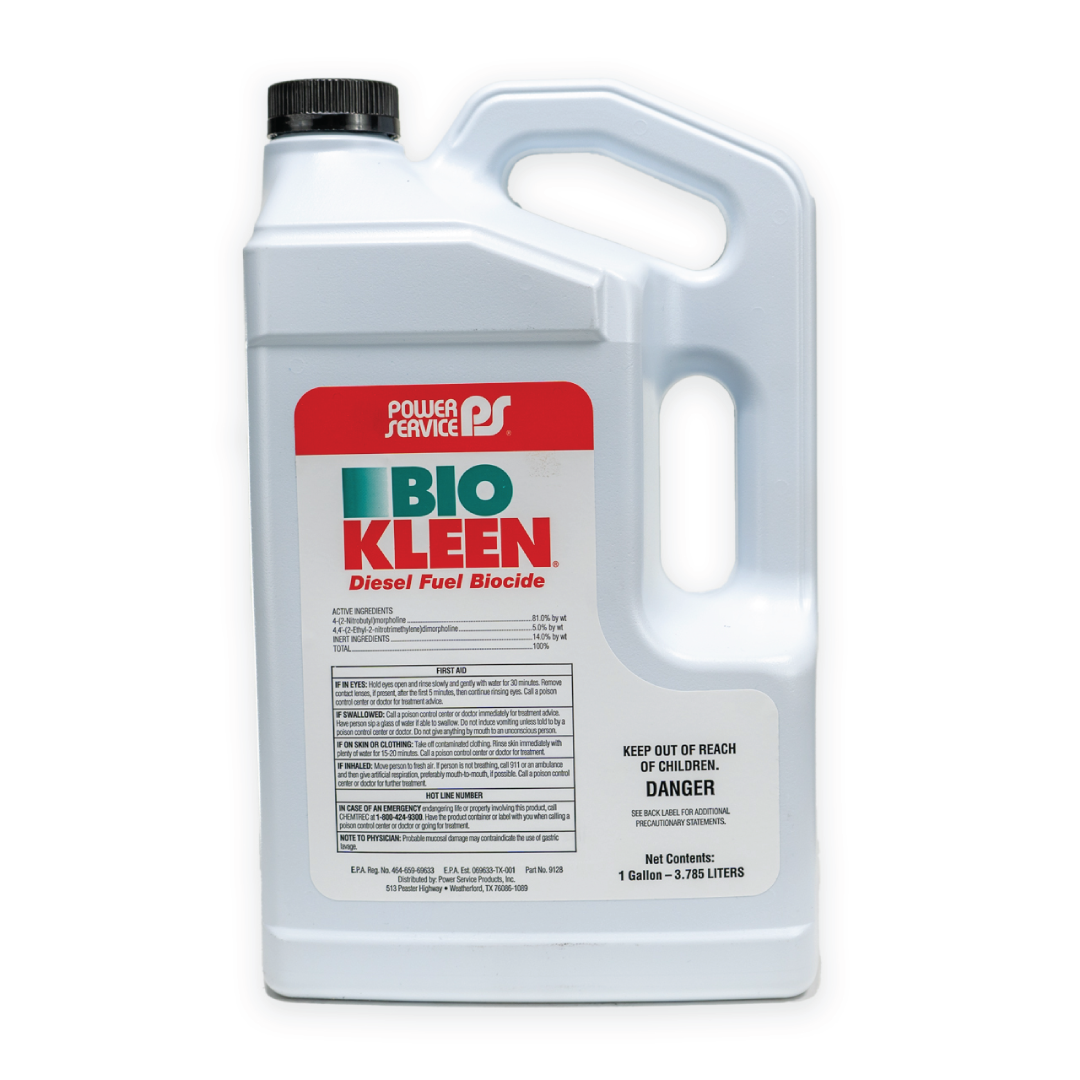
Power Service Bio Kleen Diesel Fuel Biocide
Dual-Phase Diesel Biocide for Microbial Contamination, Fuel Tanks and Stored Diesel Fuel
Power Service Bio Kleen Diesel Fuel Biocide is a dual-phase fuel treatment designed to control microbial contamination in diesel fuel systems. It works in both the diesel fuel and water phases to kill bacteria and fungus that can grow where water is present in fuel tanks.
Microbial growth can contribute to slimy deposits, plugged fuel filters, fuel-system corrosion and increased maintenance requirements. Bio Kleen can be used as a high-strength shock treatment when contamination is present or at a lower maintenance concentration to help control future microbial growth.
Bio Kleen is effective in diesel fuel, Ultra Low Sulfur Diesel (ULSD), biodiesel and biodiesel blends.
Key Benefits
- Dual-phase diesel fuel biocide
- Effective in both diesel fuel and water
- Kills bacteria and fungus associated with microbial fuel contamination
- Can be used for shock treatment of contaminated tanks
- Can be used for long-term maintenance treatment
- Helps prevent microbial-related fuel-filter plugging
- Helps protect fuel-system components from organic acids produced by microbial growth
- Helps reduce microbial-related fuel tank corrosion
- Suitable for ULSD
- Suitable for biodiesel and biodiesel blends
- Completely soluble in diesel fuel and biodiesel blends
- Compatible with diesel oxidation catalysts and diesel particulate filters on 2007 and newer diesel engines when used as directed
- EPA-registered biocide
What Causes Microbial Growth in Diesel Fuel?
Diesel fuel itself does not create microbial growth. The problem develops when water enters the fuel system.
Water can accumulate from:
- Condensation
- Fuel deliveries
- Storage-tank contamination
- Temperature changes
- Poor tank drainage
- Long-term fuel storage
Bacteria and fungus can grow where the fuel and water phases meet. As the contamination develops, microorganisms can form slime, strings, mats and other debris.
This biological material can eventually clog filters, restrict fuel flow and contribute to corrosion inside tanks and fuel-system components.
Signs of Diesel Fuel Microbial Contamination
Power Service identifies several common signs of microbial contamination:
- Dark or slimy material in the fuel
- Slime around the fuel and water interface
- Slime on tank walls
- Debris in tank sumps
- Slimy material in water drained from the tank
- Long strings, mats or globules in the fuel
- Increasing fuel-filter replacement frequency
- A rotten-egg odor
These symptoms can indicate that microbial growth has become established and that treatment and tank cleanup may be required.
Shock Treatment vs. Maintenance Treatment
Bio Kleen uses different treatment concentrations depending on whether the fuel system is already contaminated.
Shock Treatment
Use the shock-treatment rate when microbial contamination is present.
Power Service directs users to treat the total capacity of the tank, not only the amount of diesel currently in the tank.
The standard shock-treatment ratio is:
1 ounce of Bio Kleen per 20 gallons of total tank capacity.
After adding the product, fill the tank to maximum capacity so the rising fuel level contacts the tank walls.
Maintenance Treatment
Maintenance treatment uses a lower concentration to help control microbial growth after the fuel system has been cleaned.
The standard maintenance-treatment ratio is:
1 ounce of Bio Kleen per 55 gallons of diesel fuel.
Power Service Bio Kleen Treatment Ratios
| Package Size |
Shock Treatment |
Maintenance Treatment |
| 1 oz. |
20 gallons |
55 gallons |
| 16 oz. |
320 gallons |
880 gallons |
| 1 gallon |
2,500 gallons |
7,000 gallons |
| 55-gallon drum |
137,500 gallons |
385,000 gallons |
Always follow the directions on the current product label for the exact package being used.
How to Shock Treat a Contaminated Diesel Tank
- Determine the total capacity of the fuel tank.
- Add Bio Kleen at a rate of 1 ounce per 20 gallons of total tank capacity.
- Fill the tank to maximum capacity so treated fuel contacts the interior tank surfaces.
- Recirculate the fuel for approximately 30 minutes when possible.
- Allow the treated diesel fuel to sit for approximately 8 hours before use when practical.
- Inspect filters frequently after treatment.
- Drain or pump water, sludge and dead microbial material from the bottom of the tank as needed.
Treatment may release dead organisms and other contamination that can collect in filters or tank bottoms.
What Happens After Bio Kleen Kills the Microbes?
Bio Kleen kills the organisms, but the dead microbes, water and other contamination still need to be removed from the fuel system.
Power Service recommends good fuel-tank housekeeping after treatment, including:
- Draining accumulated water from tank bottoms
- Cleaning sump areas
- Inspecting and replacing plugged filters
- Filtering out microbial debris
- Removing sludge and contamination from the tank
Power Service also recommends Clear-Diesel Fuel & Tank Cleaner as part of the cleanup process when microbial contamination is present.
A biocide kills the microorganisms. It does not physically remove every contaminant from the tank.
Maintenance and Prevention
After a contaminated fuel system has been cleaned, Bio Kleen can be used periodically at the maintenance-treatment concentration.
Power Service indicates that one approach is to:
- Perform an initial shock treatment
- Follow with maintenance treatments at regularly scheduled intervals
Another option identified in the Technical Bulletin is repeating shock treatment approximately every three months when appropriate.
The correct maintenance schedule depends on storage conditions, water contamination, fuel turnover and the history of microbial problems in the tank.
Water Management Is Still Important
Although Bio Kleen works in both fuel and water, accumulated water should not simply be left in the fuel tank.
Power Service recommends routinely draining or pumping water from:
- Tank bottoms
- Sumps
- Water collection areas
Reducing available water makes the environment less favorable for future microbial growth and improves the effectiveness of a fuel-tank maintenance program.
Diesel Fuel Compatibility
Bio Kleen is suitable for:
- Conventional diesel fuel
- Ultra Low Sulfur Diesel (ULSD)
- Biodiesel
- Biodiesel blends
The Technical Bulletin lists the product as completely soluble in diesel fuel and biodiesel blends.
DPF and Diesel Emissions-System Compatibility
Power Service states that Bio Kleen will not harm diesel oxidation catalysts or diesel particulate filters on 2007 and newer diesel engines when used according to the product directions.
The product also complies with federal low-sulfur-content requirements for use in diesel motor vehicles and nonroad diesel engines.
EPA-Registered Diesel Biocide
Bio Kleen is an EPA-registered pesticide product.
EPA Registration No. 464-659-69633
Because Bio Kleen is a registered biocide, it should be used only according to the directions on the product label.
It is a violation of federal law to use this product in a manner inconsistent with its labeling.
Typical Physical Properties
| Property |
Typical Value |
| Color |
Yellow to Brown |
| Density |
8.83 lb/gal |
| Sulfur Content |
<15 ppm |
| Flash Point |
160°F |
| Pour Point |
50°F |
| Solubility in Diesel Fuel |
Completely Soluble |
| Solubility in Biodiesel / Biodiesel Blends |
Completely Soluble |
| Solubility in Kerosene |
Completely Soluble |
Storage: Power Service directs users to store Bio Kleen above 50°F.
Frequently Asked Questions
What is Power Service Bio Kleen?
Power Service Bio Kleen is a dual-phase diesel fuel biocide designed to kill bacteria and fungus associated with microbial contamination in fuel tanks.
Is Bio Kleen a diesel fuel biocide?
Yes. Bio Kleen is specifically marketed and EPA-registered as a fuel biocide for controlling microbial contamination.
Does Bio Kleen kill diesel algae?
“Diesel algae” is a common informal term for microbial contamination found in diesel tanks. Power Service specifically identifies bacteria and fungus as the organisms Bio Kleen is designed to kill.
What causes algae-like slime in diesel fuel?
The slime commonly called diesel algae is generally microbial growth associated with water in the tank. Bacteria and fungus can grow where diesel fuel and accumulated water meet.
What are signs of microbial contamination in diesel fuel?
Common signs include slimy deposits, dark growth, stringy or mat-like material, frequent fuel-filter plugging, debris in tank bottoms and a rotten-egg odor.
How much Bio Kleen should I use for shock treatment?
Use 1 ounce per 20 gallons of total tank capacity for shock treatment of a contaminated diesel tank.
How much Bio Kleen should I use for maintenance?
The maintenance-treatment ratio is 1 ounce per 55 gallons of diesel fuel.
How much does a 16 oz. bottle of Bio Kleen treat?
A 16 oz. bottle treats up to 320 gallons for shock treatment or 880 gallons for maintenance treatment.
How much does one gallon of Bio Kleen treat?
One gallon treats approximately 2,500 gallons for shock treatment or 7,000 gallons for maintenance treatment.
Do I treat the amount of fuel in the tank or the full tank capacity?
For shock treatment, Power Service instructs users to calculate the dosage based on the total capacity of the tank, not just the fuel currently in it.
How long should Bio Kleen stay in the fuel?
Power Service recommends recirculating the treated fuel for approximately 30 minutes when possible and allowing it to sit for about 8 hours before use for maximum effectiveness.
Does Bio Kleen remove dead microbes from the fuel tank?
No. Bio Kleen kills microbial growth, but dead organisms, water and sludge may remain in the tank. Drain tank bottoms, inspect filters and remove accumulated debris as needed.
Will Bio Kleen plug my fuel filter after treatment?
Treatment can release dead microbial material and other contamination already present in the fuel system. Filters should be inspected frequently after shock treatment because this debris can accumulate in the filter.
Should I remove water from the tank after using Bio Kleen?
Yes. Power Service recommends regularly draining accumulated water and cleaning tank sumps even though Bio Kleen is effective in both the fuel and water phases.
Can Bio Kleen be used in ULSD?
Yes. Bio Kleen is suitable for Ultra Low Sulfur Diesel.
Can Bio Kleen be used with biodiesel?
Yes. Power Service identifies Bio Kleen as effective in biodiesel and biodiesel blends.
Is Bio Kleen safe for DPF-equipped diesel engines?
Power Service states that the product will not harm diesel particulate filters or diesel oxidation catalysts on 2007 and newer diesel engines when used as directed.
Can Bio Kleen be used as a regular diesel fuel additive?
Bio Kleen is primarily intended for microbial contamination control. It can be used at a lower maintenance concentration after treatment, but it is not a general cetane booster, injector cleaner or winter anti-gel.
What is the difference between Bio Kleen and Clear-Diesel?
Bio Kleen is a biocide that kills microbial contamination. Clear-Diesel is used for fuel and tank cleanup, including water and residual contamination. Power Service recommends using the products together when a contaminated fuel tank requires both microbial treatment and cleanup.
How often should Bio Kleen be used?
Treatment frequency depends on the severity of contamination and storage conditions. Power Service recommends shock treatment for active contamination followed by scheduled maintenance treatments, or repeating shock treatment approximately every three months where appropriate.
Where do I add Bio Kleen?
Add Bio Kleen to the fuel or storage tank according to label directions. Do not add it to a diesel exhaust fluid (DEF) tank.








 Product Videos