Understanding the Water Spray-Off Test for Grease
By on Mar 10 2026
Grease is expected to stay in place while protecting components from wear, corrosion, and contamination. In wet environments, that protection depends on how well the grease resists being washed away. The water spray-off test measures how effectively a grease remains on a surface when exposed to direct water spray.
This test helps maintenance teams and equipment operators understand whether a grease will hold up in rain, washdown procedures, or high-moisture environments.
Why Water Resistance Matters
When grease washes away, metal surfaces lose their protective film. This can lead to accelerated wear, corrosion, and unplanned downtime.
Water resistance is critical in industries such as construction, mining, agriculture, food processing, and marine operations. Equipment exposed to spray, runoff, or frequent washdowns requires greases designed to remain in place under wet conditions.
What the Water Spray-Off Test Measures
The ASTM water spray-off test evaluates how much grease is removed from a metal surface under controlled conditions. The procedure provides a measurable percentage that indicates how well a grease resists water displacement.
Lower spray-off percentages indicate better water resistance. Higher percentages suggest the grease may not remain in place under wet operating conditions.
How the Test Is Performed
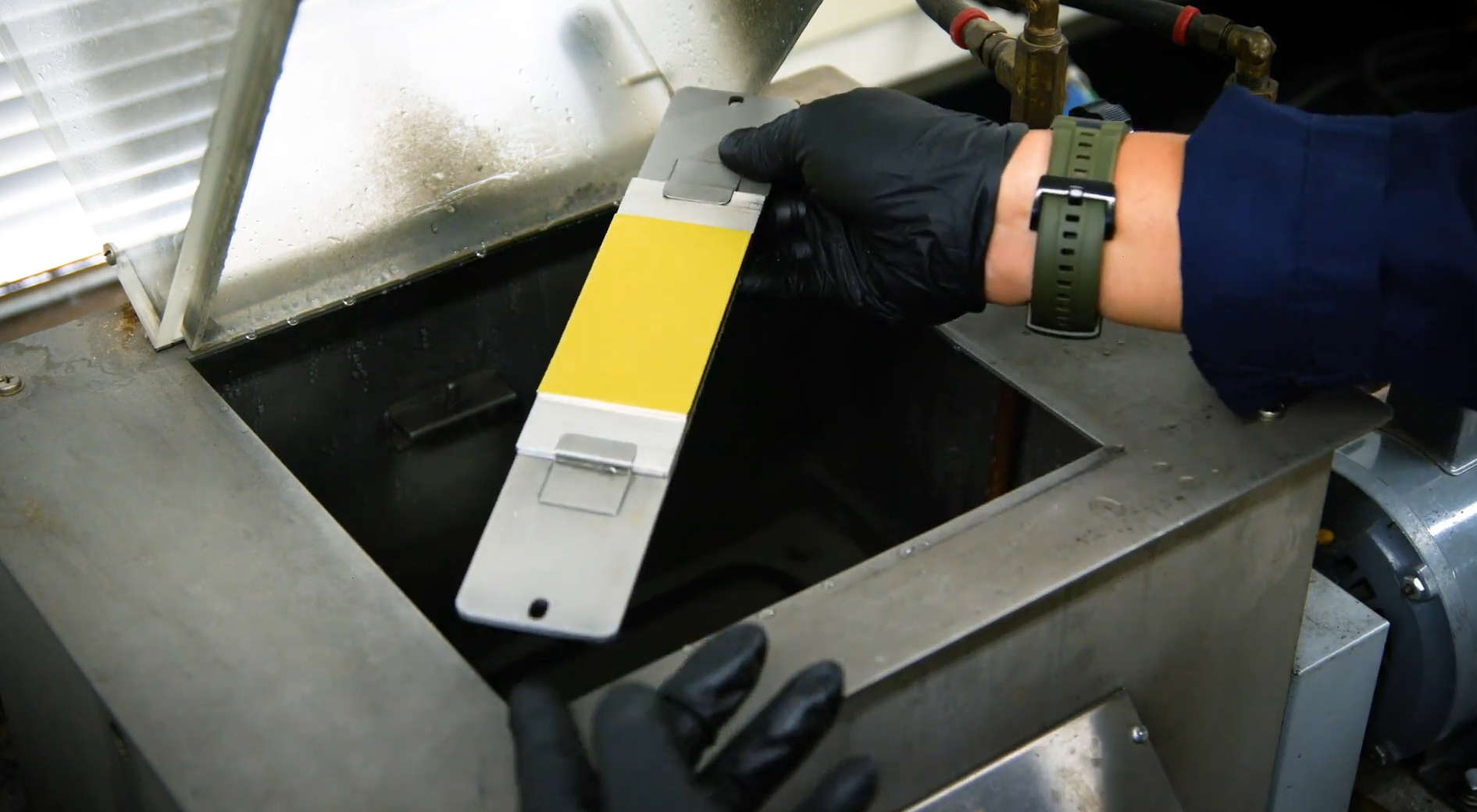
- A measured film of grease is applied to a stainless-steel panel. The coating thickness is standardized to ensure consistent results.
- The panel is weighed before and after grease application. This establishes the exact amount of grease being tested.
- Water is sprayed directly onto the grease-coated panel at controlled pressure and temperature for five minutes. The water pressure is maintained at 40 PSI, and the temperature is set to 100°F (38°C).
- After spraying, displaced grease is removed and the panel is dried. The panel is weighed again to determine how much grease was lost during testing.
Interpreting the Results
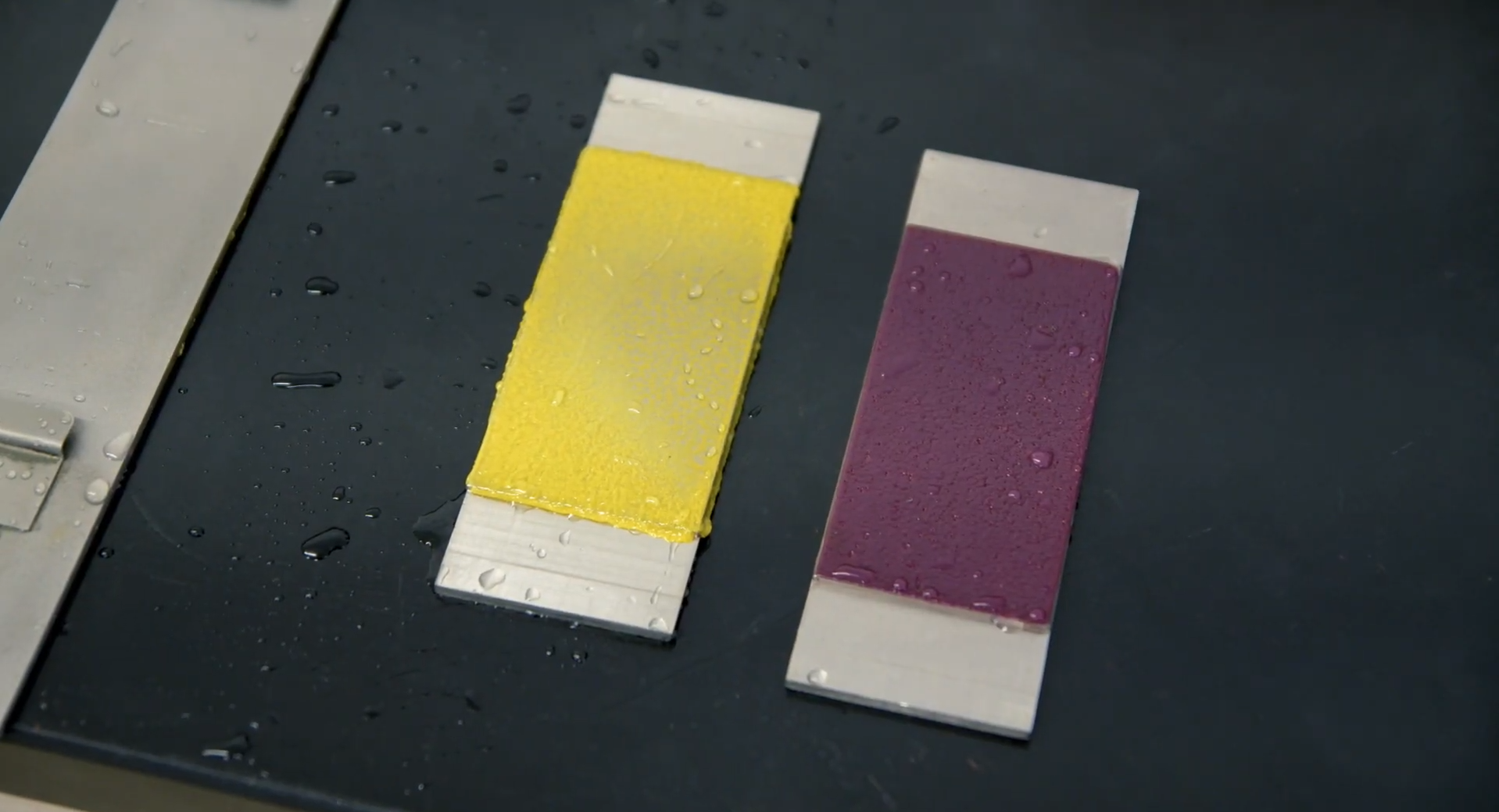
The difference in weight before and after the test reveals the percentage of grease removed. This percentage is reported as the spray-off result.
Results under 40 percent are generally considered good. Results below 10 percent indicate excellent resistance to water spray.
Side-by-side comparisons often reveal significant differences between grease formulations. Thickener type, base oil viscosity, and additive systems all influence performance.
What Affects Spray-Off Performance
Not all greases perform equally in wet conditions. Several formulation factors influence water resistance:
Thickener Type
Certain thickener systems adhere better to metal surfaces and resist washout.
Base Oil Viscosity
Higher viscosity oils can improve film retention but must still allow proper lubrication.
Polymer Additives
Special polymers improve adhesion and help grease remain in place under water spray.
Tacky, adhesive formulations are often selected for equipment exposed to water because they cling to surfaces while still lubricating moving components. Products like Mystik Lithoplex Red Tacky Grease, are commonly used where resistance to washout and sling-off is critical.
Where Water Spray-Off Resistance Matters Most
- → Equipment exposed to rain and mud
- → Pressure-washed machinery and fleet vehicles
- → Agricultural and construction equipment
- → Marine and dockside equipment
- → Food processing facilities with washdown cycles
High-temperature environments can also accelerate grease loss when water is present. In these conditions, a grease formulated for both heat resistance and adhesion, such as Mystik JT-6 High-Temp Grease, can help maintain lubrication under harsh operating conditions.
Key Takeaways
The water spray-off test provides a clear measure of how well a grease resists displacement under wet conditions. Lower spray-off percentages indicate better retention and longer-lasting protection.
Selecting grease for wet environments requires more than load protection or temperature resistance. Water resistance plays a direct role in equipment reliability and maintenance costs.
Understanding this test helps ensure the grease chosen will remain in place when conditions are at their worst.
FAQs
What does the water spray-off test measure?
It measures the percentage of grease removed from a surface when exposed to pressurized water spray.
What is considered a good spray-off result?
Results under 40 percent are considered good. Results below 10 percent indicate excellent resistance.
Why does grease wash off in wet environments?
Water pressure, surface movement, and poor adhesion can displace grease, leaving metal surfaces unprotected.
How can grease be made more water resistant?
Formulations may include adhesive polymers, specialized thickeners, and higher-viscosity base oils to improve retention.
When is water-resistant grease most important?
It is essential for equipment exposed to washdowns, rain, mud, marine environments, or high-moisture operating conditions.