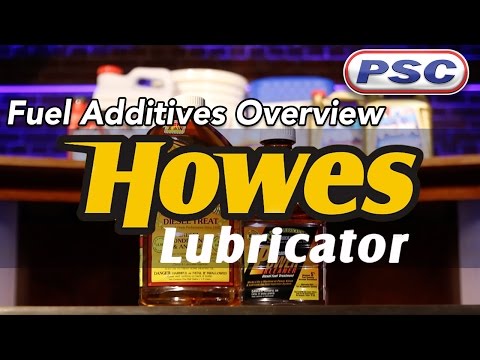
Howes Diesel Treat Diesel Anti-Gel & Fuel Conditioner
Preventive Winter Diesel Fuel Treatment for Anti-Gel Protection, Lubricity and Water Removal
Howes Diesel Treat is a petroleum-based diesel anti-gel and fuel conditioner designed to help prevent diesel fuel from gelling in cold weather while adding lubricity, helping control injector deposits, and removing water from the fuel.
The formula contains no alcohol or harmful solvents and is designed for modern diesel fuel systems, including Ultra Low Sulfur Diesel (ULSD), diesel engines equipped with emissions-control systems, and biodiesel blends up to B20.
Diesel Treat is a preventive winter additive. It should be added before the fuel has gelled or reached its cloud point.
Key Benefits
- Helps prevent diesel fuel from gelling in cold weather
- Lowers the Cold Filter Plugging Point of treated diesel fuel
- Adds lubricity for fuel injectors, pumps, and upper cylinders
- Helps prevent fuel-injector deposits
- Demulsifies water so it can be removed by the fuel/water separator
- Contains no alcohol or harmful solvents
- Suitable for ULSD
- Effective in biodiesel blends up to B20
- Compatible with diesel particulate filter and emissions systems when used as directed
- Suitable for trucks, pickups, tractors, construction equipment, RVs, and other diesel equipment
- Designed for preventive winter treatment at each fill-up
How Howes Diesel Treat Helps Prevent Fuel Gelling
As diesel fuel gets colder, naturally occurring paraffin wax can begin forming crystals. If those crystals become large enough, they can restrict fuel flow through lines and filters.
Howes Diesel Treat contains a cold-flow improver designed to reduce the effects of wax formation and lower the Cold Filter Plugging Point of the treated fuel.
For best results, add Diesel Treat before temperatures fall enough for wax crystals to begin forming. Adding the product during refueling helps distribute the treatment throughout the tank.
Diesel Treat is not designed to reliquefy fuel that has already gelled.
Adds Lubricity for ULSD Fuel Systems
Ultra Low Sulfur Diesel contains less natural lubricity than older diesel fuels.
Diesel Treat adds lubricity to help protect fuel injectors, pumps, and other fuel-system components that depend on the fuel itself for lubrication.
This can be particularly useful in modern high-pressure diesel fuel systems where tight clearances place additional demands on fuel lubricity.
Water Removal by Demulsification
Howes Diesel Treat does not emulsify water into the fuel.
Instead, its petroleum-based formula demulsifies or separates water from diesel fuel, allowing the water to move to the vehicle's fuel/water separator where it can be removed.
This differs from alcohol-based treatments that can disperse water throughout the fuel.
Injector Deposit Control
Diesel Treat includes detergent chemistry designed to help prevent fuel-injector deposits.
Deposits can interfere with injector spray patterns and combustion quality. Keeping the fuel system cleaner helps support consistent fuel delivery and engine operation.
Howes Diesel Treat Treatment Ratios
The correct treatment rate depends on temperature and application.
| Package Size |
Above 0°F |
Below 0°F |
| 15 oz. |
Up to 75 gal. |
Up to 37.5 gal. |
| 32 oz. |
Up to 160 gal. |
Up to 80 gal. |
| 64 oz. |
Up to 320 gal. |
Up to 160 gal. |
| 1 gallon |
Up to 640 gal. |
Up to 320 gal. |
| 55-gallon drum |
Up to 35,200 gal. |
Up to 17,600 gal. |
Equivalent standard manufacturer treatment rates are:
- Above 0°F: 1 oz. per 5 gallons of diesel fuel
- Below 0°F: 1 oz. per 2.5 gallons of diesel fuel
Cars, pickups, and tractors should use double the listed treatment rate in both temperature ranges.
Always follow the directions on the current product container.
When Should Howes Diesel Treat Be Added?
For winter protection, Diesel Treat should be added before diesel fuel begins to cloud or gel.
Adding the treatment while refueling helps promote thorough mixing. Continue treating fuel during cold-weather operation according to the temperature and equipment-specific dosage.
What If the Diesel Fuel Is Already Gelled?
Howes Diesel Treat is a preventive anti-gel and will not reverse fuel that has already gelled.
If fuel has already gelled or wax has blocked the fuel system, use an emergency winter fuel treatment specifically designed to restore fuel flow, such as Howes Diesel Lifeline, according to its directions.
Diesel and Biodiesel Compatibility
Howes Diesel Treat is suitable for:
- Conventional diesel fuel
- Ultra Low Sulfur Diesel (ULSD)
- Biodiesel blends up to B20
- Diesel engines with modern emissions systems
It is intended for diesel fuel systems and should not be used in gasoline engines.
Frequently Asked Questions
What is Howes Diesel Treat?
Howes Diesel Treat is a preventive diesel anti-gel and fuel conditioner designed to help prevent fuel gelling, add lubricity, control injector deposits, and separate water from diesel fuel.
Is Howes Diesel Treat an anti-gel?
Yes. Diesel Treat contains a cold-flow improver designed to help prevent wax crystals from restricting fuel flow in cold weather.
How much Howes Diesel Treat should I use?
For most applications, the standard treatment rate is 1 oz. per 5 gallons above 0°F and 1 oz. per 2.5 gallons below 0°F. Cars, pickups, and tractors should double both treatment rates.
How many gallons does a 15 oz. bottle of Howes Diesel Treat treat?
A 15 oz. bottle treats up to 75 gallons above 0°F under the standard treatment rate. Below 0°F, it treats approximately 37.5 gallons. Cars, pickups, and tractors require a higher dosage.
How many gallons does a 32 oz. bottle of Howes Diesel Treat treat?
A 32 oz. bottle treats up to 160 gallons above 0°F or approximately 80 gallons below 0°F under the standard treatment rate.
How many gallons does a 64 oz. bottle of Howes Diesel Treat treat?
A 64 oz. bottle treats up to 320 gallons above 0°F or approximately 160 gallons below 0°F under the standard treatment rate.
Does Howes Diesel Treat reliquefy gelled diesel fuel?
No. Diesel Treat is designed to prevent gelling. Once diesel fuel has already gelled, use an emergency recovery treatment such as Howes Diesel Lifeline.
When should I add Howes Diesel Treat?
Add Diesel Treat before the fuel reaches its cloud point or begins to gel. Adding it during refueling helps thoroughly mix the treatment with the diesel fuel.
Does Howes Diesel Treat remove water from diesel fuel?
Yes. Diesel Treat demulsifies water, separating it from the fuel so it can be collected and removed by the fuel/water separator.
Does Howes Diesel Treat contain alcohol?
No. Howes Diesel Treat is petroleum based and contains no alcohol or harmful solvents.
Does Howes Diesel Treat add lubricity?
Yes. Diesel Treat adds lubricity to help protect fuel injectors, pumps, and other fuel-system components.
Is Howes Diesel Treat safe for ULSD?
Yes. Diesel Treat is designed for use with Ultra Low Sulfur Diesel and helps address lubricity and cold-flow concerns associated with modern diesel fuel.
Can Howes Diesel Treat be used with biodiesel?
Yes. Howes identifies Diesel Treat as effective in biodiesel blends up to B20.
Is Howes Diesel Treat safe for diesel particulate filters?
Yes. Howes identifies Diesel Treat as particulate-filter friendly and suitable for modern diesel emissions systems when used according to directions.
Does Howes Diesel Treat contain a cetane booster?
No. Howes currently states that its diesel additives do not contain a cetane booster. Diesel Treat is formulated around anti-gel protection, lubricity, water handling, and deposit control rather than a separate cetane-boosting additive.
Can Howes Diesel Treat be used year-round?
It can be used year-round, but its primary advantage is cold-weather anti-gel protection. Howes recommends other products in its line when maximum warm-weather detergent and lubricity performance is the main objective.








 Fuel Additive Calculator
 Product Videos