Fluid Film Rust & Corrosion Protection
Lanolin-Based Undercoating, Penetrant and Lubricant for Automotive, Agricultural, Marine and Industrial Equipment
Fluid Film is a lanolin-based corrosion preventive, penetrating lubricant, and metal protectant designed to form a soft, non-drying barrier on metal surfaces. Its wool-wax formulation combines highly refined petroleum oils with selected additives to provide corrosion protection, penetration, metal wetting, lubrication, and water displacement.
Unlike hard undercoatings that cure into a rigid film, Fluid Film remains soft and active after application. This allows the coating to migrate into seams, crevices, fasteners, and other difficult-to-reach areas while maintaining a flexible protective layer that will not dry out, chip, or crack.
Key Benefits
- Lanolin and wool-wax based corrosion preventive
- Helps protect metal against rust and atmospheric corrosion
- Penetrates existing rust and corrosion to reach underlying metal
- Non-drying, flexible protective film
- Solvent-free formulation
- Displaces water from metal surfaces
- Provides penetrating lubrication for moving parts
- Helps loosen corroded and seized fasteners
- Does not contain silicone
- Suitable for most painted surfaces
- Does not pit aluminum
- Useful for automotive, agricultural, marine, industrial, fleet, and maintenance applications
Fluid Film for Automotive Undercoating
Fluid Film is commonly used as a vehicle undercoating and rust-prevention treatment on exposed metal areas that are subject to road salt, calcium chloride, moisture, and other corrosive contaminants.
Because the coating remains soft and pliable, it can migrate into seams and inaccessible areas instead of forming a rigid shell.
Common automotive treatment areas include:
- Frames and chassis components
- Rocker panels
- Wheel wells and wheel arches
- Springs
- Fasteners
- Trailer components
- Door cavities
- Hinges and latches
- Battery terminals
- Electrical connections
- Winches and cables
As a general application guideline, approximately one gallon can cover one vehicle, and an undercoating application can provide up to approximately one year of protection. Actual coverage and service life depend on vehicle size, film thickness, exposure, road conditions, and application technique.
Rust and Corrosion Prevention
Fluid Film is designed to prevent corrosion rather than chemically remove existing rust.
When applied over rusted metal, Fluid Film penetrates rust and scale toward the base metal and leaves an active barrier that helps limit continued exposure to moisture and oxygen. It can also help loosen heavily corroded nuts, bolts, shafts, and other metal components during maintenance.
Penetrating Lubrication
Fluid Film also functions as a penetrating lubricant for moving metal components and mechanisms.
Common lubrication and maintenance applications include:
- Chains
- Cables
- Hinges
- Locks
- Gears
- Winches
- Hoists
- Slides
- Trailer hitches
- Agricultural equipment
- Mower decks
- Tools
- Sprayers and spreaders
- Irrigation equipment
- Corroded nuts and bolts
Its non-drying character allows the protective and lubricating film to remain active rather than evaporating after application.
Agricultural, Industrial and Marine Applications
Fluid Film can be used on compatible equipment exposed to moisture, fertilizers, salts, outdoor storage, and other corrosive environments.
Agriculture
- Tractors
- Combines and combine chains
- Balers
- Fertilizer spreaders
- Cultivators
- Augers
- Irrigation fittings
- Three-point hitches
- Equipment stored outdoors
Industrial & Maintenance
- Conveyors
- Hoists
- Tools
- Welds
- Locks
- Gears
- Hose reels
- Cables and chains
- Exposed machinery
Marine
- Exposed metal
- Fasteners
- Cables
- Machinery
- Equipment subjected to salt air and moisture
Paint, Plastic and Rubber Compatibility
Fluid Film can be used on most painted surfaces and plastics. Technical testing reports no effect on most painted surfaces and no pitting of aluminum.
Use caution around non-oil-resistant rubber, which may swell after prolonged exposure. Neoprene and Buna-N showed no adverse effect under the conditions reported in the technical data sheet.
Fluid Film may also soften some existing vehicle undercoatings or undercoating-type paints. Check compatibility before applying it over another coating system.
Repainting After Fluid Film
Fluid Film contains no silicones, but its non-drying protective film must be removed before painting.
Surfaces should be thoroughly cleaned before repainting. Hot-water or steam detergent washing at approximately 120°F is recommended as an effective removal method before applying paint or another coating.
Applying Bulk Fluid Film
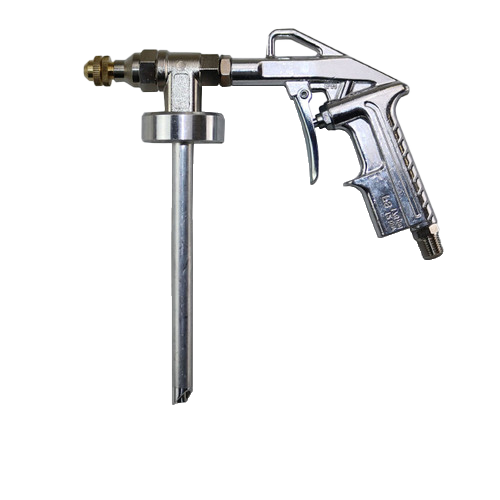
Bulk Fluid Film can be applied using appropriate undercoating or airless spray equipment.
- Air-powered undercoating gun: approximately 70 to 90 PSI
- Airless spraying: approximately 2,000 PSI minimum
- Recommended airless spray tip: 515 to 517
- Typical film thickness: approximately 3 to 4 mil
- Approximate coverage: 250 sq. ft. per gallon at 3 to 4 mil
Fluid Film is thixotropic and can become thicker while sitting. Stir or shake thoroughly to return the material to a thinner application consistency.
A standard pump-up garden sprayer is not recommended for bulk Fluid Film.
Typical Properties
The following technical data applies to Fluid Film NAS or Fluid Film AS after aerosol propellant has evaporated, unless otherwise indicated.
| Property |
Typical Value |
| Appearance |
Clear, straw-colored liquid |
| Viscosity at 70°F |
16,800 to 21,600 cP |
| Bulk Liquid Flash Point |
405°F minimum |
| Non-Volatile Content |
89% minimum |
| VOC, AS Aerosol |
Less than 25% |
| VOC, NAS Non-Aerosol |
Less than 1% |
| Specific Gravity |
0.875 to 0.885 |
| Effect on Most Painted Surfaces |
None |
| Effect on Aluminum |
No pitting |
| ASTM D1735 Humidity Cabinet |
Passes 50 days |
| ASTM D1748 Humidity Cabinet |
Passes 30 days |
| Water Replacement |
Displaces water from metal surfaces |
Technical values apply to Fluid Film NAS or Fluid Film AS after aerosol propellant has evaporated unless otherwise noted. Refer to the applicable Safety Data Sheet for package-specific handling information.
Frequently Asked Questions
What is Fluid Film?
Fluid Film is a lanolin-based corrosion preventive, penetrating lubricant, and metal protectant. It forms a soft, non-drying film that helps protect metal against moisture and corrosion while providing lubrication and water displacement.
Is Fluid Film an undercoating?
Yes. Fluid Film is commonly used as a non-drying automotive undercoating for frames, chassis components, wheel wells, rocker panels, and other exposed metal surfaces.
Is Fluid Film lanolin based?
Yes. Fluid Film uses specially processed wool wax, commonly referred to as lanolin, together with highly refined petroleum oils and selected additives.
Does Fluid Film prevent rust?
Fluid Film is designed to help prevent rust and corrosion by creating a moisture-resistant protective film over metal surfaces.
Does Fluid Film remove rust?
No. Fluid Film is not a chemical rust remover. It can penetrate existing rust and rust scale, helping reach the underlying metal and limit continued corrosion while making loose corrosion easier to remove.
Can Fluid Film be applied over existing rust?
Yes. Fluid Film can be applied over existing rust. Its penetrating properties allow it to work through rust and scale toward the underlying metal while leaving a non-drying protective film.
How long does Fluid Film undercoating last?
For automotive undercoating, current application guidance indicates protection of up to approximately one year. Actual service life depends on application thickness, vehicle use, road conditions, washing, salt exposure, and other operating conditions.
How much Fluid Film is needed to undercoat a vehicle?
Approximately one gallon is a general guideline for treating one vehicle. Larger trucks, extensive cavity treatment, or heavier application may require more material.
Can Fluid Film be used on painted surfaces?
Yes, on most painted surfaces. The technical data sheet reports no effect on most paints. Test compatibility first, particularly with specialty coatings or existing undercoating systems.
Is Fluid Film safe on rubber?
Fluid Film is compatible with tested neoprene and Buna-N materials, but it may cause swelling of non-oil-resistant rubber. Avoid prolonged exposure to rubber materials of unknown compatibility.
Can Fluid Film be used on aluminum?
Yes. The technical data sheet reports no pitting of aluminum.
Does Fluid Film dry?
No. Fluid Film is designed to remain soft and non-drying. This allows the coating to stay active, migrate into seams and crevices, and maintain a flexible corrosion barrier.
Does Fluid Film contain solvents?
No. Fluid Film is solvent-free. The non-aerosol NAS formulation also contains less than 1% VOC according to the technical data sheet.
Can Fluid Film be painted over?
Not without removing the residual film first. Fluid Film is non-drying and should be thoroughly cleaned from the surface before painting.
How do I spray Fluid Film from a gallon or 5-gallon pail?
Bulk Fluid Film is best applied with an undercoating gun or suitable airless spray equipment. Current guidance recommends approximately 70 to 90 PSI for an air-powered undercoating gun or at least 2,000 PSI for airless equipment. A standard pump-up sprayer is not recommended.
What is the coverage of one gallon of Fluid Film?
At approximately 3 to 4 mil film thickness, current application guidance estimates coverage at about 250 square feet per gallon.








 Find The Right Coating
 Product Videos


