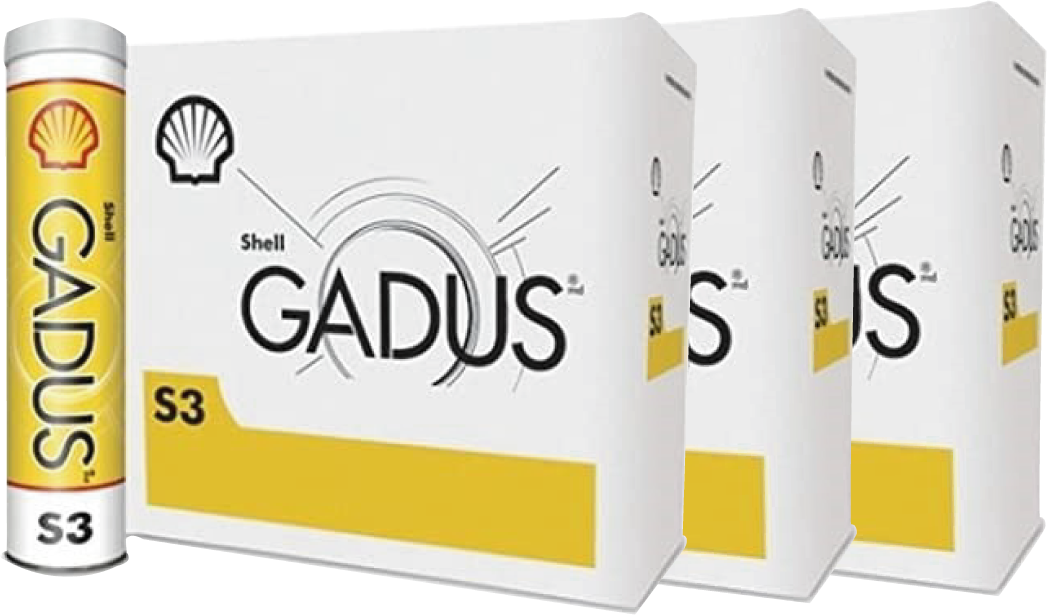
Shell Gadus S3 V220C 2 Grease
NLGI 2 Lithium Complex Extreme-Pressure Grease for High-Temperature and Heavy-Load Bearings
Shell Gadus S3 V220C 2 is a premium multipurpose NLGI 2 extreme-pressure grease formulated with high-viscosity-index mineral base oil and a lithium complex thickener. It is designed for heavy-duty bearings operating under high loads, elevated temperatures, vibration and exposure to water.
The formulation provides mechanical stability, extreme-pressure load-carrying performance, water resistance, oxidation resistance and corrosion protection for demanding industrial and automotive applications.
Shell Gadus S3 V220C 2 is red in color and has a typical mineral base-oil viscosity of 220 cSt at 40°C.
Key Features
- NLGI Grade 2 grease
- Lithium complex thickener
- Mineral base oil
- Typical base-oil viscosity of 220 cSt at 40°C
- Extreme-pressure additive system
- Excellent mechanical stability under vibration
- Strong load-carrying performance
- Good resistance to water exposure
- High dropping point
- Designed for extended operation at elevated temperatures
- Helps protect bearings and components against corrosion
- Red color for easy identification
- Operating temperature range of -20°C to 140°C
- Peak operating temperature up to 150°C
- NLGI HPM + HL certified
- Meets NLGI GC-LB performance classification
Heavy-Duty Bearing Grease
Shell Gadus S3 V220C 2 is primarily designed for heavy-duty bearings exposed to demanding operating conditions.
Shell identifies applications including:
- Continuous casting equipment
- Vibrating sieves
- Quarry equipment
- Breakers
- Roller conveyors
- Wheel bearings
- Other compatible automotive applications
The combination of a lithium complex thickener and high-viscosity mineral base oil makes the grease particularly suited to applications where loads and operating temperatures are higher than those typically encountered with lighter multipurpose greases.
NLGI Grade 2 Consistency
Shell Gadus S3 V220C 2 has an NLGI 2 consistency, the most commonly used consistency grade for general grease lubrication.
Its worked cone penetration is typically:
265 to 295, measured at 25°C under ASTM D217 / IP 50.
NLGI 2 provides a balance between:
- Staying in the bearing or lubrication point
- Pumpability through common grease equipment
- Mechanical stability
- Sealing and lubricant retention
Always confirm that NLGI 2 is appropriate for the equipment, speed, temperature and lubrication system.
Lithium Complex Thickener
The lithium complex thickener gives Shell Gadus S3 V220C 2 several characteristics useful in severe service.
- High dropping point
- Mechanical stability
- Resistance to softening under repeated working
- Good high-temperature performance
- Water resistance
The current Shell Technical Data Sheet lists a typical dropping point of 240°C.
Dropping point should not be interpreted as the maximum continuous operating temperature. Shell specifies a normal operating range of -20°C to 140°C, with peaks up to 150°C.
Extreme-Pressure and Load-Carrying Performance
Heavy-duty bearings can encounter high loads, shock loading and conditions where the lubricating film is subjected to substantial pressure.
Shell Gadus S3 V220C 2 contains extreme-pressure additives designed to help protect loaded contact surfaces.
The current Technical Data Sheet lists a minimum Four Ball Weld Load of 315 kg under ASTM D2596.
This supports its use in industrial applications where bearing loads are higher than those normally encountered in light-duty service.
Mechanical Stability Under Vibration
Vibration can mechanically work grease and cause some products to soften, leak or move away from the lubrication point.
Shell specifically identifies mechanical stability under vibration as a key performance feature of Gadus S3 V220C 2.
The grease is designed to retain its consistency over long periods even in severe vibrating conditions, making it relevant for applications such as:
- Vibrating screens and sieves
- Quarry equipment
- Crushers and breakers
- Conveyor systems
- Other heavily loaded industrial bearings
Water Resistance
Shell Gadus S3 V220C 2 provides good resistance to water exposure.
This helps the grease remain in place and continue protecting lubricated components when equipment is exposed to moisture or significant amounts of water.
Water resistance is particularly useful in industrial environments where washdown, weather or process water can reach bearings and other lubrication points.
High-Temperature Operation
Shell Gadus S3 V220C 2 is designed for bearings operating at elevated temperatures.
- Normal operating range: -20°C to 140°C
- Peak temperature: 150°C
For bearings operating near the upper end of the recommended temperature range, Shell advises reviewing and potentially shortening re-greasing intervals.
Actual grease life depends on bearing temperature, speed, load, contamination, grease quantity and equipment design.
Automotive and Wheel Bearing Applications
The current Shell Technical Data Sheet specifically identifies wheel bearings and other automotive applications among the intended uses.
Shell Gadus S3 V220C 2 also meets the NLGI GC-LB performance classification, which covers demanding wheel-bearing and chassis grease performance.
Use the product only where the vehicle or component manufacturer specifies an NLGI 2 grease with compatible performance characteristics.
NLGI HPM + HL Certification
Shell Gadus S3 V220C 2 is certified under the NLGI High-Performance Multiuse (HPM) grease specification.
It also carries the +HL designation, indicating enhanced high-load performance.
The HPM certification evaluates grease performance in areas including:
- Mechanical stability
- Water resistance
- Oxidation and heat resistance
- Corrosion protection
- Oil separation
- Load-carrying performance
NLGI currently lists Gadus S3 V220C 2 as both HPM +HL certified and GC-LB classified.
Specifications, Certifications and Recommendations
- NLGI HPM + HL
- NLGI Performance Classification GC-LB
- SEB 181 253
- MB 267.1
- DTFR 33B130
For equipment-specific approvals or applications not listed here, confirm requirements with Shell or the equipment manufacturer.
Former Product Names
Shell Gadus S3 V220C 2 was formerly known as:
- Shell Albida Grease EP 2
- Shell Retinax LX 2
These former names remain useful when cross-referencing older equipment maintenance records, lubricant charts and purchasing documents.
Typical Physical Properties
| Property |
Typical Value |
| NLGI Consistency |
2 |
| Color |
Red |
| Thickener |
Lithium Complex |
| Base Oil |
Mineral |
| Base Oil Viscosity at 40°C |
220 cSt |
| Base Oil Viscosity at 100°C |
19 cSt |
| Worked Cone Penetration at 25°C |
265-295 |
| Dropping Point |
240°C |
| Four Ball Weld Load |
315 kg minimum |
| Long-Distance Pumpability |
Fair |
| Operating Temperature |
-20°C to 140°C |
| Peak Operating Temperature |
150°C |
Typical physical characteristics represent current production and should not be treated as guaranteed batch specifications.
Frequently Asked Questions
What is Shell Gadus S3 V220C 2?
Shell Gadus S3 V220C 2 is a premium NLGI 2 lithium complex extreme-pressure grease formulated for heavy-duty industrial and automotive bearings operating under high loads, elevated temperatures and demanding conditions.
Is Shell Gadus S3 V220C 2 an NLGI 2 grease?
Yes. The current Technical Data Sheet lists an NLGI consistency grade of 2.
Is Shell Gadus S3 V220C 2 a lithium grease?
More specifically, it is a lithium complex grease. Lithium complex thickeners provide high-temperature capability and mechanical stability for demanding grease applications.
What color is Shell Gadus S3 V220C 2?
The grease is red.
What is the base-oil viscosity of Shell Gadus S3 V220C 2?
The mineral base oil has a typical viscosity of 220 cSt at 40°C and 19 cSt at 100°C.
Is Shell Gadus S3 V220C 2 ISO VG 220?
Greases do not use ISO VG classification in the same way industrial oils do. However, the base oil in Gadus S3 V220C 2 has a typical viscosity of 220 cSt at 40°C, which is in the ISO VG 220 viscosity range.
Is Shell Gadus S3 V220C 2 an EP grease?
Yes. Shell describes it as a premium multipurpose extreme-pressure grease designed to provide enhanced load-carrying performance.
What is the operating temperature of Shell Gadus S3 V220C 2?
Shell specifies a normal operating range of -20°C to 140°C, with peak temperatures up to 150°C.
What is the dropping point of Shell Gadus S3 V220C 2?
The typical dropping point is 240°C.
Can Shell Gadus S3 V220C 2 be used for wheel bearings?
Yes. Wheel bearings and other automotive applications are specifically listed in the current Shell Technical Data Sheet, provided the component requires a compatible NLGI 2 grease.
Is Shell Gadus S3 V220C 2 suitable for high-temperature bearings?
Yes. High-temperature bearing service is one of the product's primary applications. Re-greasing intervals should be reviewed when bearings operate near the upper end of the recommended temperature range.
Is Shell Gadus S3 V220C 2 water resistant?
Yes. Shell identifies good water resistance as a key performance benefit and states that the grease provides lasting protection in the presence of significant water exposure.
Is Shell Gadus S3 V220C 2 good for vibrating equipment?
Yes. Shell specifically highlights its mechanical stability and ability to retain consistency under severe vibration.
What does HPM + HL mean?
HPM stands for NLGI High-Performance Multiuse grease. The +HL enhancement indicates additional high-load performance beyond the core HPM requirements.
Is Shell Gadus S3 V220C 2 GC-LB certified?
Yes. It meets the NLGI GC-LB performance classification and is currently listed by NLGI as a GC-LB grease.
What does GC-LB mean?
GC-LB is an NLGI performance classification covering demanding automotive wheel-bearing and chassis lubrication requirements.
Does Shell Gadus S3 V220C 2 meet Mercedes-Benz specifications?
The current product information lists MB 267.1 and DTFR 33B130.
What was Shell Gadus S3 V220C 2 formerly called?
It was formerly sold as Shell Albida Grease EP 2 and Shell Retinax LX 2.
How often should Shell Gadus S3 V220C 2 be reapplied?
Re-greasing intervals depend on bearing design, load, speed, operating temperature, contamination and grease quantity. Shell specifically recommends reviewing re-greasing intervals when bearings operate near the maximum recommended temperature.
Can I mix Shell Gadus S3 V220C 2 with another grease?
Grease compatibility depends on thickener chemistry, base oil and additive systems. Do not assume two greases are compatible simply because they share the same NLGI grade. Follow the equipment manufacturer's grease-change procedure or confirm compatibility before mixing products.









 Product Videos


